St. Louis metro · documented storm inspections
Book a Hail Damage Roof Inspection in St. Louis
Hail crossed your street and nothing looks wrong from the driveway. It usually does not: the two things hail does to a shingle are both invisible from the ground. So somebody goes up with a ladder, a camera and a chalk square, walks every slope, and hands you the file.
- Every slope walked and photographed, with a chalked test square counted on each one
- Measurements you can set beside the insurer's own estimate, line by line
- A written scope in your hand before the adjuster is on the property
Keys Roofing. Roofing, gutters and downspouts across greater St. Louis. Atlas and Malarkey shingles. Licensed and insured.
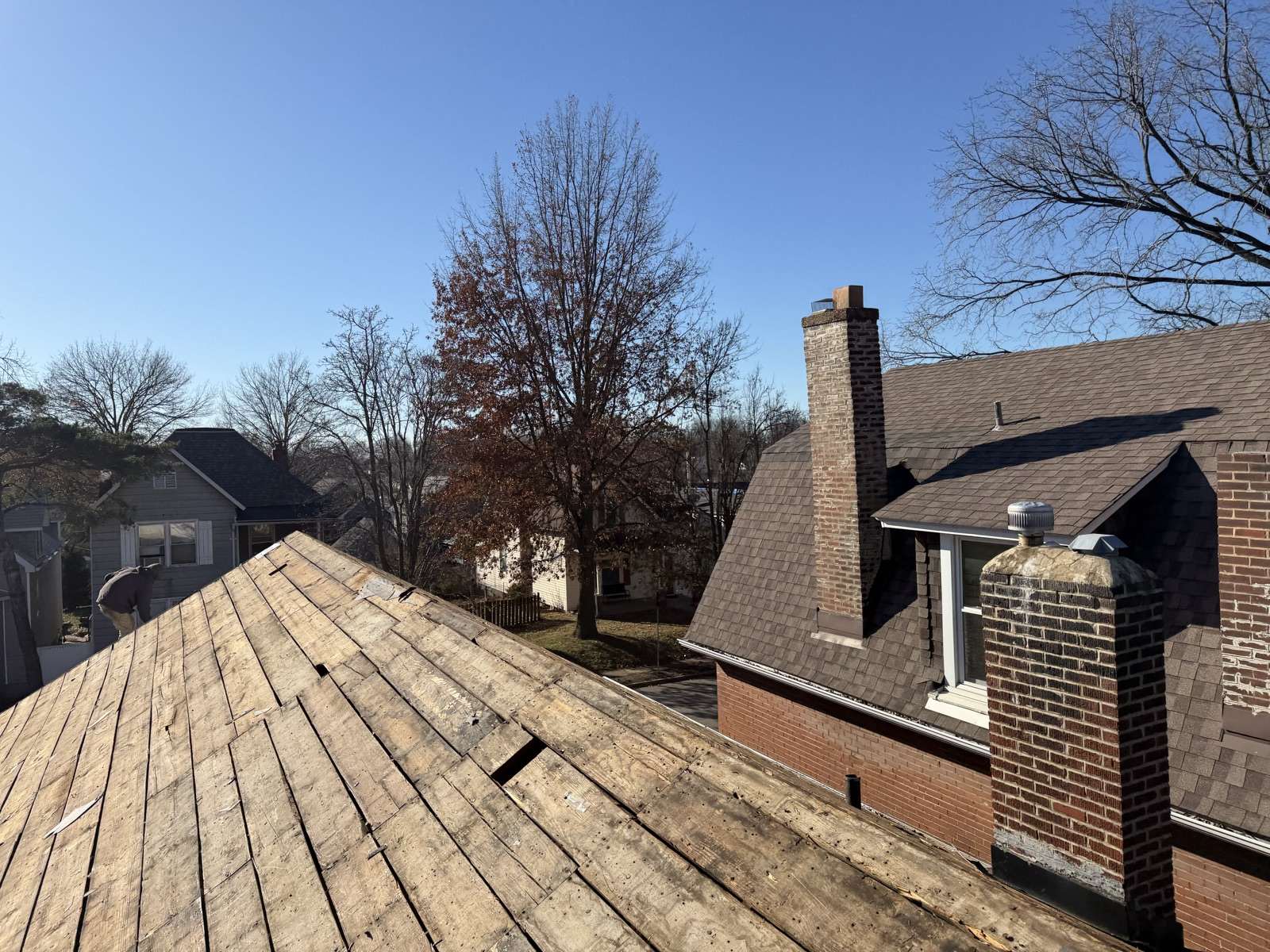 125logged county hail reports, 2020 to 2025
The reading, St. Louis County, 2020 to 2025
Every confirmed hail report NOAA recorded in the county across six years.
Tennis ball. Enough to split a shingle outright rather than just bruise it.
Slightly over a quarter. Not dramatic, and quite capable of fracturing a mat.
Hail is not a rare event on a St. Louis roof. It is a recurring one. A roof that is fifteen years old in this metro has stood under a great deal of it, and roughly fifty six percent of the metro's annual hail reports land in April and May. These are logged NOAA reports rather than counts of damaged roofs, and the full county record with that caveat set out is here.
The part that is counterintuitive
Hail damage almost never looks like damage
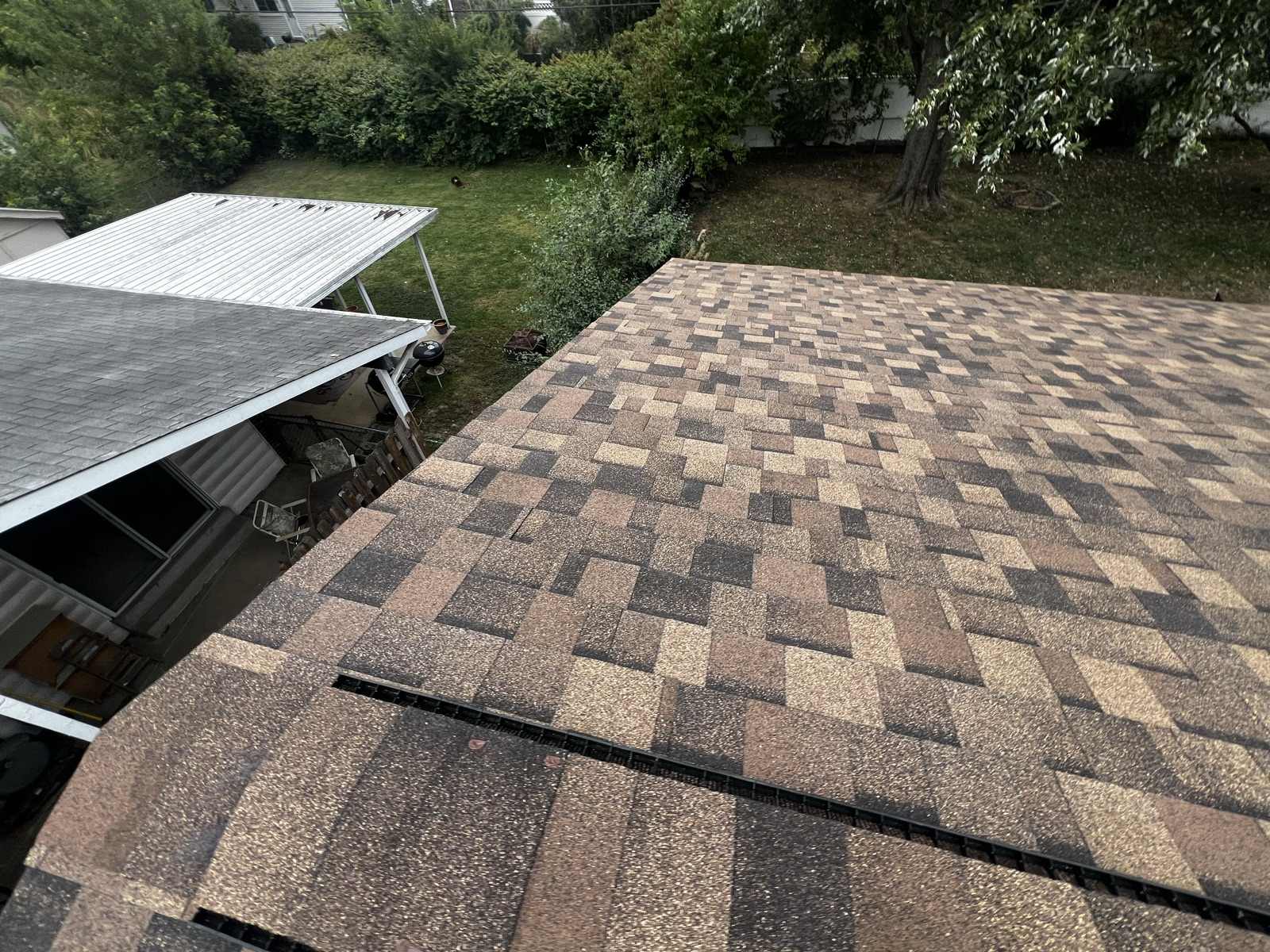
People expect a hole. Holes happen, at the top of the size range, but they are the exception. The ordinary result of a St. Louis hailstorm on an asphalt shingle is two things you cannot see: a bruise, where the impact fractures the fibreglass mat underneath without breaking the surface, and granule loss, where the coloured grit that shields the asphalt from ultraviolet light gets knocked off in a patch the size of a thumbprint.
Neither one leaks. Not that week, not that year. The granules are the shingle's sunscreen, and once a patch of them is gone the asphalt underneath starts cooking. The mat fracture is a crack waiting for a freeze and thaw cycle to open it, and St. Louis supplies about a hundred of those a year. The roof fails somewhere between two and six years later, long after the storm has stopped being anybody's explanation, and gets written off as age.
That delay is the whole problem. It is why the homeowner who looks up, sees nothing obviously wrong, and decides to leave it, is making a reasonable decision on bad information. The full mechanics are on this page.
Where the proof actually sits
Soft metal keeps the receipt
The most useful thing about a hailstorm is that it hits everything, not just the roof, and some of what it hits records the strike permanently. Aluminium and thin steel take a permanent dent from a stone that a shingle merely absorbs. So the survey starts at the ground.
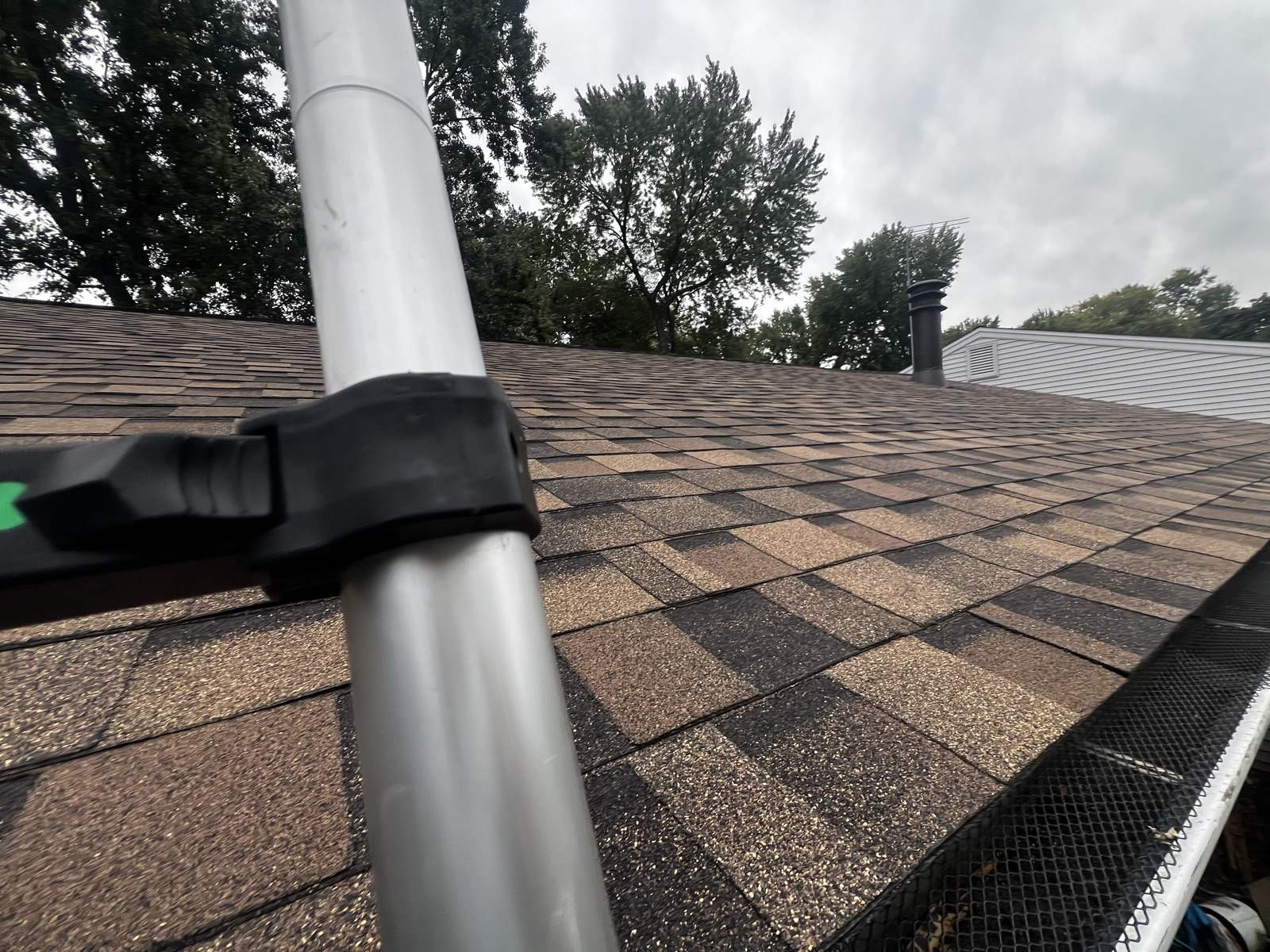
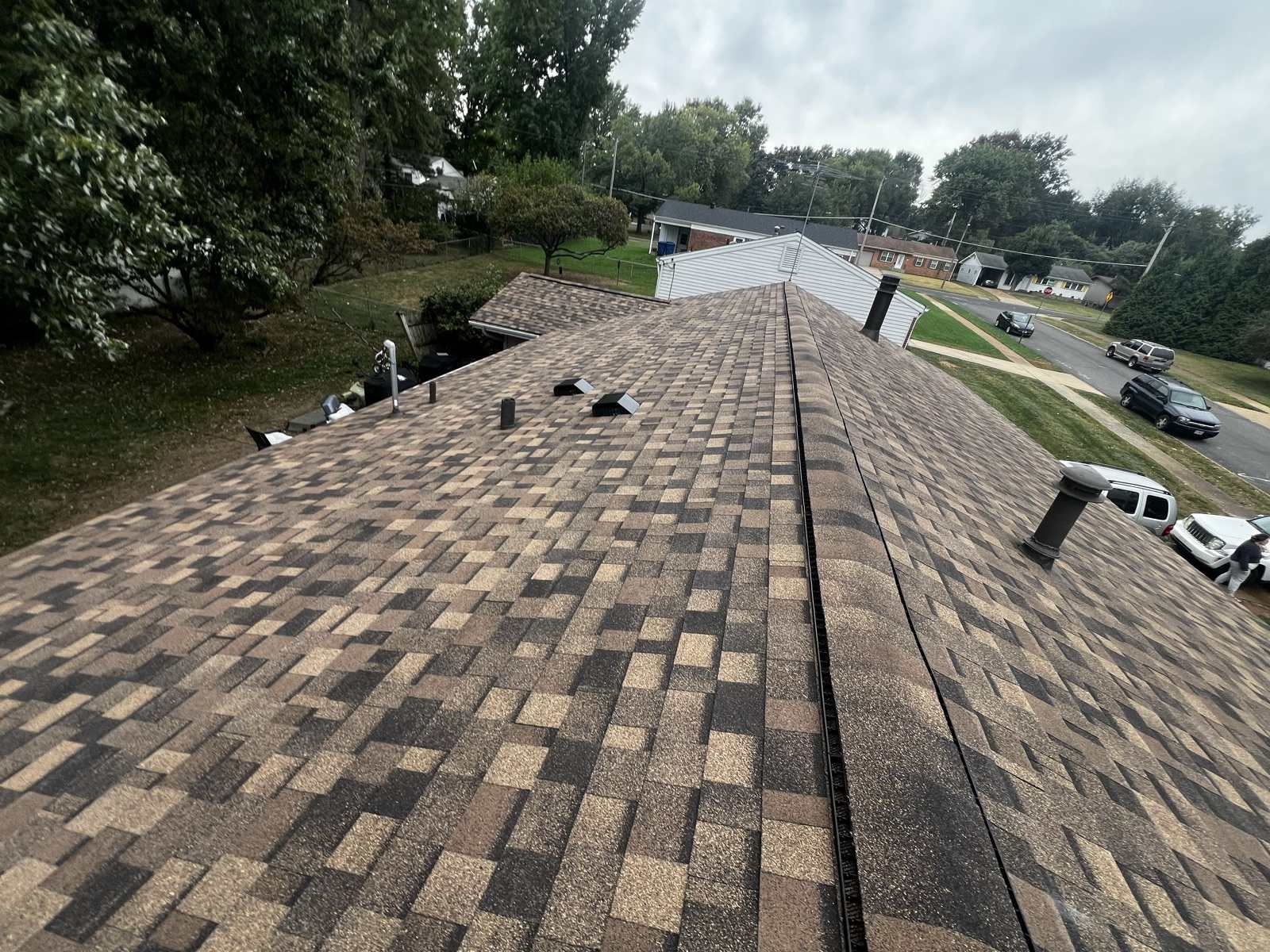
Downspouts, gutter faces, drip edge, valley metal, roof vents, the collars on pipe boots, chimney flashing, the fins on the air conditioning condenser, the mailbox, the garage door, and the window screens. If the soft metal on the west and south elevations is dimpled and the north side is clean, that tells you the direction the storm came from and which slopes took the beating. It does not, on its own, prove the shingles are compromised. It tells the inspector exactly where to look and it dates the event. How to read it, elevation by elevation.
Use this at your door
Two offers that tell you to close the door
Somebody will knock this week. Two things they can say settle it on the spot, because Missouri made both of them unlawful.
A contractor shall not represent or negotiate, or offer or advertise to represent or negotiate, on behalf of an owner or possessor of real estate on any insurance claim in connection with the repair or replacement of roof systems. RSMo 407.725, Missouri Revised Statutes
A separate part of the same statute bars a roofing contractor from advertising or promising to pay, absorb, waive or rebate any part of an insurance deductible. Violating either is an unfair practice under the Missouri Merchandising Practices Act.
So an offer to handle the paperwork, fight the insurer, or make your deductible go away is not generosity: RSMo 407.725 forbids all three. What it tells you is that the rules are optional for that company, which is worth knowing before it is standing on your roof with a nail gun, and it arrives free, in the first two minutes.
The lawful version is the one that leaves you holding something. The roof gets climbed, photographed and measured, a chalked test square gets counted on every slope, the scope gets written down, and the contractor stands on the property as the contractor while your adjuster inspects, so the person who actually walked those slopes is there when questions get asked about them. The conversation with your insurer stays yours. If you want a professional who can argue it for you, that is a licensed public adjuster, a separate profession under Missouri law, and the same law bars them from doing your repair work.
Expiring
Missouri has a deductible tax credit and it stops next October
RSMo 135.445 · no new credits after October 15 2026
A credit equal to your homestead insurance deductible, up to five thousand dollars
Missouri authorised a tax credit equal to a homestead insurance deductible incurred during the 2025 calendar year, capped at five thousand dollars, and made it transferable. The statute says no new credits are authorised after October 15 2026.
This is not a contractor promotion and no roofing company is permitted to attach anything to it: the same statute that bars claim representation also bars a roofer from offering you anything at all involving your deductible. This is a state tax credit, administered by the Missouri Department of Revenue, that you or your tax preparer claim. Almost nobody in this market is writing about it, and it expires. What it is, what it is not, and what to keep.
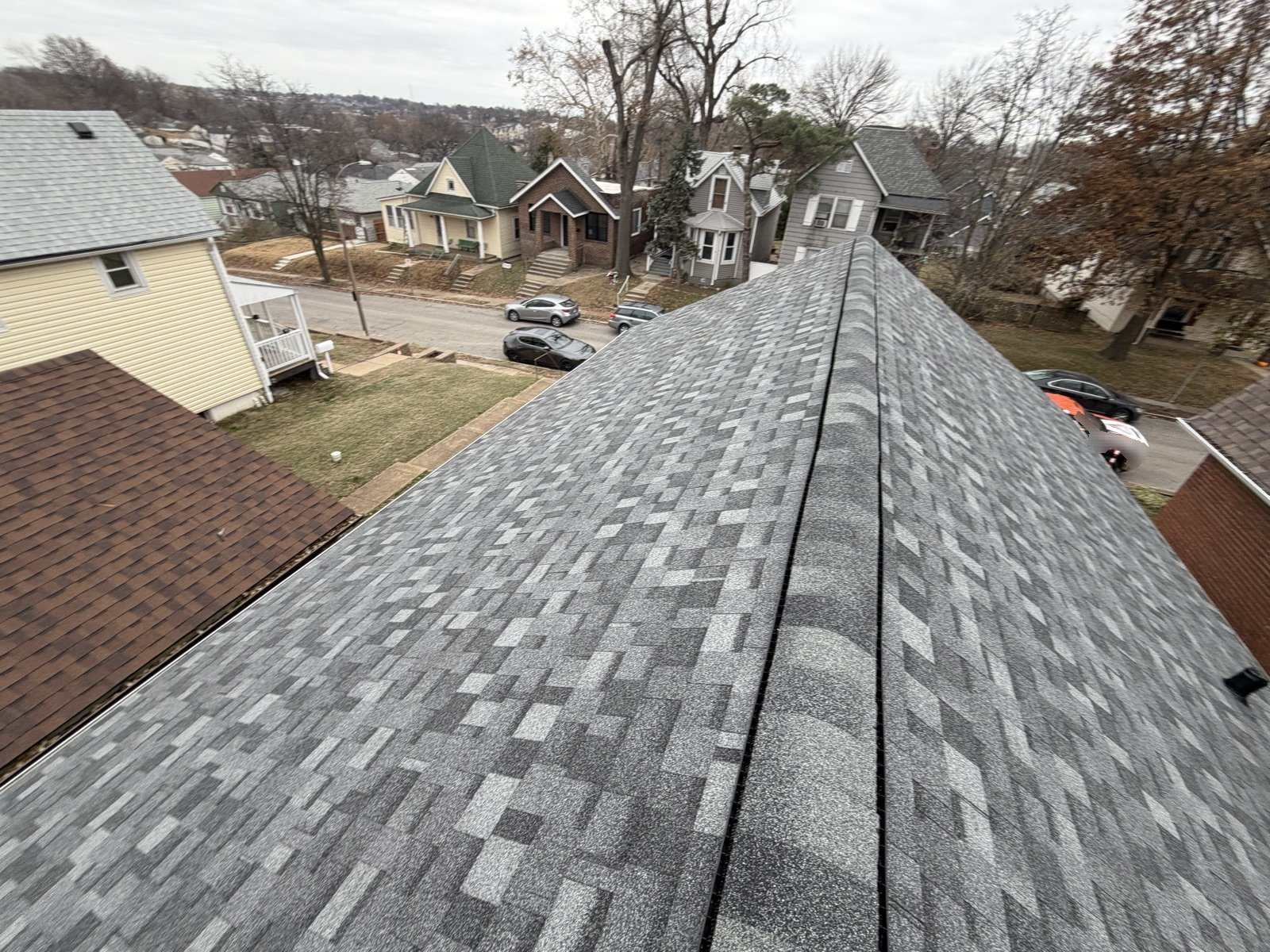
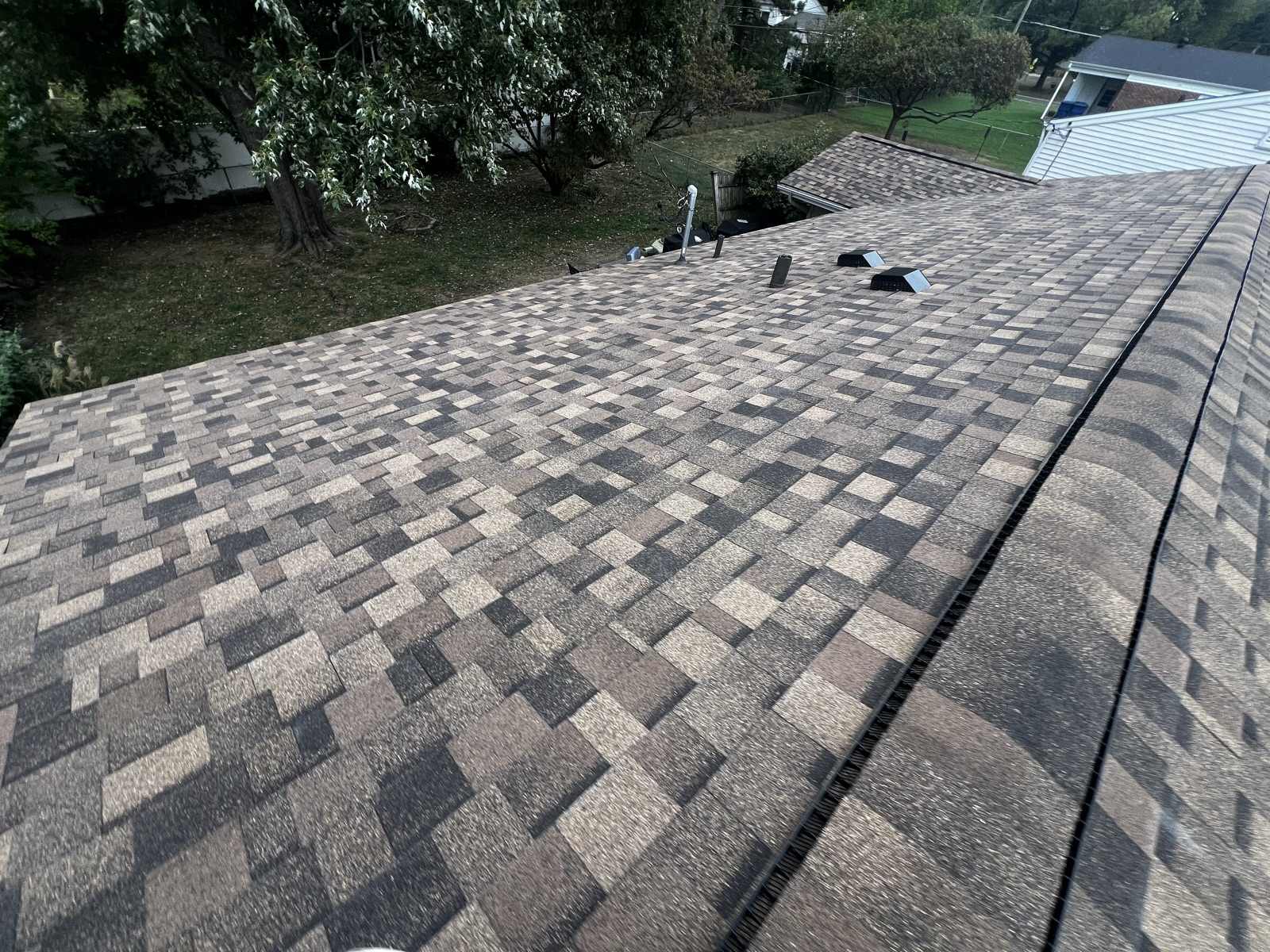
What the street sees when it is done right
The desk
Ten pages, each one a question somebody actually asked
Nothing here needs reading in order. If a storm crossed your street this week, start with the seventy two hour page and come back to the rest later.
The first seventy two hours
What to do the morning after, in order, from the ground. What to photograph, what to write down, what to open in your policy, and the two things not to sign while there is a truck idling at the kerb.
Read → No. 02What hail does to shingles
Bruising, granule loss, and the delayed failure. Why a roof can be finished on the day of the storm and look untouched for four years.
Read → No. 03Reading soft metal
Downspouts, drip edge, vents, condenser fins. What a dent proves, what it only suggests, and the survey order that finds it fastest.
Read → No. 04What the inspection covers
The sequence, the test square, the photographs, the written scope. What you get at the end and what it is deliberately not.
Read → No. 05The hail record for this metro
Six years of NOAA reports by county, the seasonality, the 2025 season in Missouri, and an honest account of what the counts do and do not measure.
Read → No. 06How a Missouri claim works
Adjuster, scope, actual cash value, recoverable depreciation, supplements. Who does what, and where the roofer's role stops by law.
Read → No. 07The deductible tax credit
RSMo 135.445, up to five thousand dollars, transferable, and closing to new credits on October 15 2026.
Read → No. 08Matching and partial roofs
The most confidently misquoted subject in Missouri roofing. What the actual law is, what it is not, and why it turns on your policy.
Read → No. 09Hiring after a storm
Door knockers, contingency agreements, permits in St. Louis County, and the fact that Missouri has never passed a state roofing licence.
Read → No. 10Questions
Twelve real ones: cosmetic exclusions, metal roofs, permits, deductibles, and what happens if the adjuster says no.
Read →Scope of work
What Keys does, said plainly
Roofing, gutters and downspouts. That is the whole list, and the shortness of it is the point: a long one is how a storm crew ends up subcontracting your roof to somebody you never met.
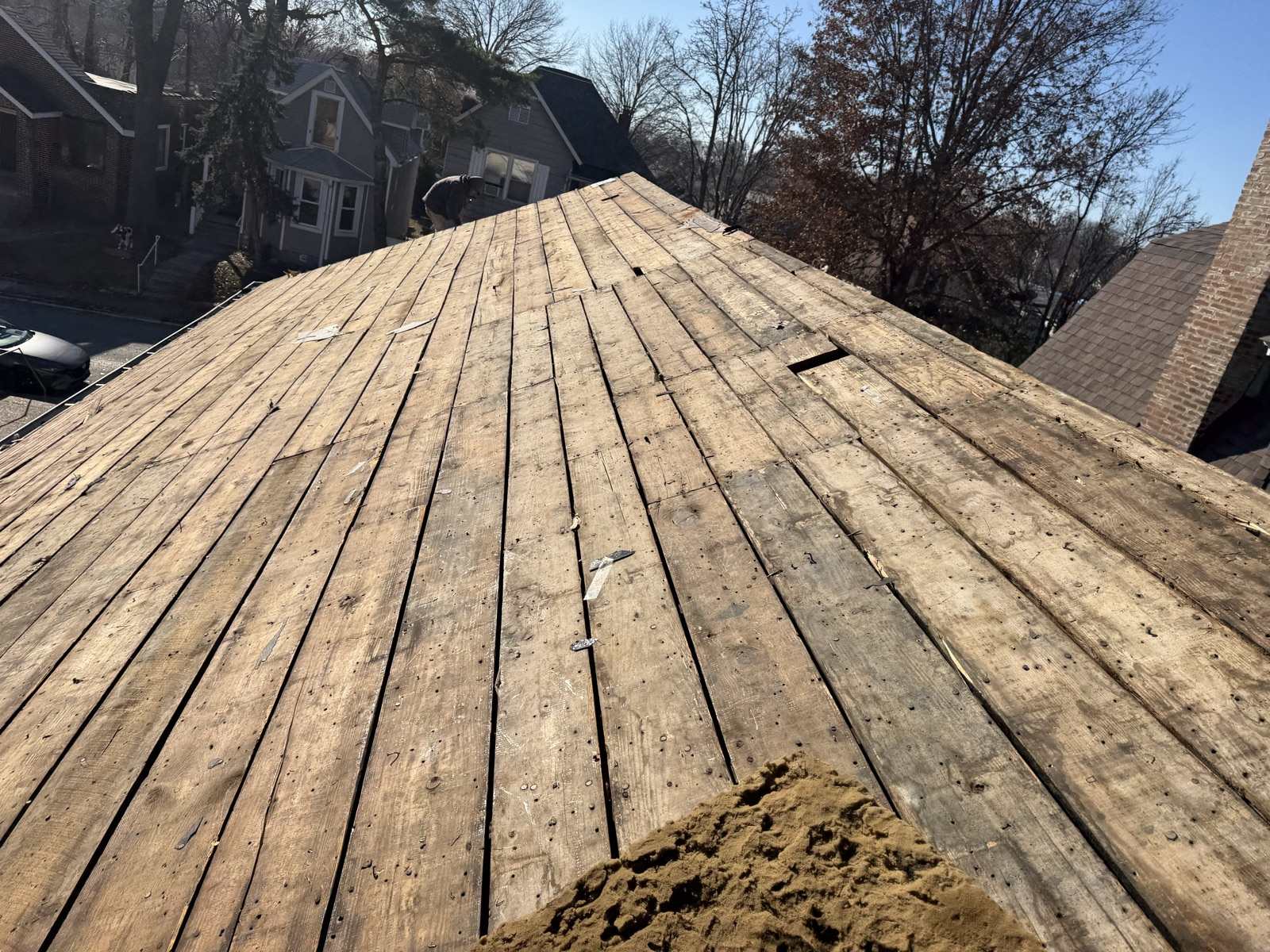
- Tear-off and full replacement, with decking replaced wherever it has softened
- Leak tracing and repair: flashing, pipe boots, valleys, ridge, fasteners
- Documented storm inspections, photographs and a written scope in your hand
- Seamless gutter rolled on site, guards, resealing and re-hanging
- Downspout reroutes, extensions and buried drainage to a proper outlet
Shingles are Atlas and Malarkey. Drainage is the unusual one on that list. Most roofing companies in this metro stop at the gutter and leave the water to find its own way down, which it does, generally into a basement, generally in the same spring the new roof went on.
Questions
Three that come up every single time
How soon after a hailstorm should I have the roof looked at?
Sooner is better, and the reason is evidence rather than urgency. A roof that took hail is not going to fail this week. But a dated set of photographs taken while the bruises are fresh and the soft metal is still dimpled is a far better record than one taken next spring, by which point three more storms have crossed the same street and nobody can say which one did what.
Can hail damage a roof without anything looking wrong from the ground?
Routinely. The two things hail does to an asphalt shingle, fracturing the mat under the surface and knocking granules loose, are both invisible from a driveway and largely invisible from the gutter line too. That is exactly why storm damage on a St. Louis roof tends to be found years late, when the shingle finally opens up.
Does Keys Roofing handle the insurance side of it?
No, and no roofing contractor in Missouri may, because RSMo 407.725 bars a contractor from representing or negotiating a homeowner on an insurance claim. What Keys does is climb the roof, photograph it, measure it, write a scope describing the damage and the repair, and be on site as the contractor when the adjuster comes out. The conversation with the insurer is yours.
Nine more, including the ones about cosmetic exclusions and metal roofs →
Keys Roofing
Get somebody on the roof with a camera
This desk is published by Keys Roofing, the roofing, gutter and downspout contractor for greater St. Louis. When you are ready for someone on the roof with a camera, this is the crew that climbs it.
- Licensed and insured, greater St. Louis
- Atlas and Malarkey shingles, installed by the company you call
- Roofing, gutters and downspouts. Nothing else.
- Every photograph on this desk is a real Keys jobsite
Quicker by phone(314) 220-2333
Book it
Send it, get a callback
Send it and the office rings you back to set a time. Greater St. Louis. Roofing, gutters and downspouts.