Hail Damage Roof STL · The claim
How a Missouri roof claim works, from first call to last cheque
Six stages in order, with the money explained at each one: actual cash value first, recoverable depreciation later, supplements when the roof turns out to be different from the estimate. And the one thing to have in your hand before the adjuster arrives.
You have decided to file, or you are deciding. The sequence below is how these claims usually run in Missouri, and the single most useful thing you can do before any of it starts is walk into it holding your own record of the roof: photographs organised by elevation, a chalked test square counted on every slope, and measurements you can set beside the adjuster's estimate line by line. Get that first and everything after it is easier. Every policy is different, so read yours.
The sequence
-
You report the loss
You, or your agent on your instruction. Give the date of the storm and what you have found. Ask for the claim number and the name of the adjuster assigned. Policies generally require prompt notice, so this is not a thing to sit on for a season.
-
An adjuster inspects
Usually a field adjuster employed by or contracted to your insurer, sometimes with a drone or a third party ladder assist. After a metro-wide event these people are working enormous volume and are frequently from out of state.
-
A scope and estimate are produced
The adjuster writes what they found and prices it, generally in industry estimating software with regional unit costs. You are entitled to a copy of that estimate. Read it against your own inspection report line by line: slope areas, ridge and hip footage, valley footage, penetration counts, and whether items like ice and water shield, drip edge, ridge vent and disposal are actually in there.
-
The first payment arrives, usually smaller than the total
On a replacement cost policy the insurer typically pays the actual cash value first, which is the replacement cost minus depreciation for the age and condition of the old roof, minus your deductible. The withheld amount is the recoverable depreciation.
-
The work is done and the balance is claimed
On a replacement cost policy the recoverable depreciation is released once the work is actually completed and documented, usually against a final invoice. On an actual cash value policy there is no second payment, which is why the settlement basis on your declarations page matters so much.
-
Supplements, if the roof turns out to be different than the estimate assumed
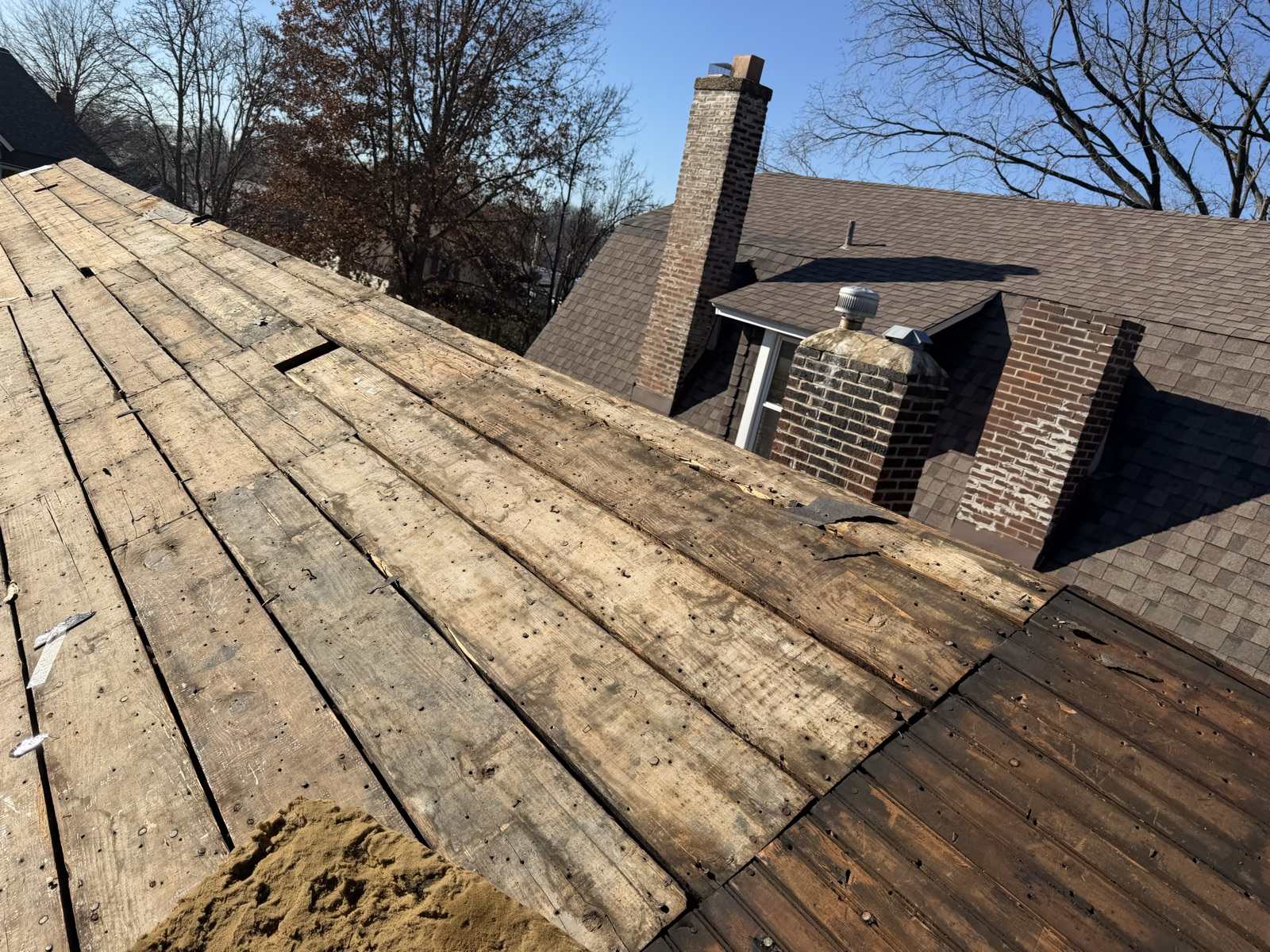
Once a roof is open, things appear: soft decking, a second layer nobody knew about, code requirements the original scope missed. Additional documented items get submitted for review. The contractor supplies the documentation for the work; the request and the conversation about it are yours.
What to have in your hand before the adjuster arrives
- A dated, photographed, slope by slope record of the roof's condition
- A chalked test square counted on every slope, in the language an adjuster already works in
- Measurements that can be checked against the insurer's estimate line by line
- A written scope in the order the roof is actually built, so line items are comparable
- The contractor on site as the contractor while the adjuster inspects, answering questions about the roof
- Documentation of anything the tear-off turns up that the original scope did not contemplate
Walk into that visit holding all six and the conversation is about the roof. Turn up holding nothing and it is a conversation about memory, and memory is the weaker document. Most of the crews working this metro in the month after a storm cannot produce that list, because producing it takes an hour on the slopes rather than six minutes in a driveway.
The two offers that disqualify a contractor
RSMo 407.725 bars a roofing contractor from representing or negotiating on a property owner's insurance claim, or offering or advertising to, and separately bars advertising or promising to pay, waive, absorb or rebate any part of a deductible. A violation is an unfair practice under the Missouri Merchandising Practices Act. Hearing either offer at your door is free information about the company making it.
RSMo 407.725 · Missouri Merchandising Practices Act
Who is allowed to advocate for you
A public adjuster. That is a separate licensed profession in Missouri under chapter 325 of the statutes, and their entire job is representing the policyholder on a claim. Two things worth knowing before you engage one. First, Missouri does not cap a public adjuster's fee, so the percentage is a negotiation and you should treat it as one. Second, RSMo 325.055 bars a public adjuster from also performing the repair work, which is the structural reason the two roles stay separate: the person arguing about the value of the loss is not the person who gets paid to fix it.
Most people simply do it themselves, and a dated inspection report with photographs and measurements is most of what that conversation needs.
Two Missouri rules almost nobody knows
You have ten years, not one. The limitation period for an action on a written contract in Missouri, which includes an insurance policy, is ten years under RSMo 516.110(1). Many policies contain a clause purporting to shorten that to one or two years. In Missouri, RSMo 431.030 makes a contractual provision that shortens a statutory limitation period null and void. That does not mean a claim should be left to rot, and it does not override a policy's separate requirement of prompt notice of loss. It does mean that the sentence in the policy telling you the window has closed is not necessarily the end of the story, and that is a question for a lawyer rather than a roofer.
Nobody is required to use a preferred contractor. An insurer may recommend a programme contractor. Choosing your own is your call, and the settlement is based on the scope of the loss rather than on which company you hire.
Before the adjuster arrives
Turn up to that visit holding your own record
Photographs by elevation, a chalked test square counted on every slope, measurements and a written scope. Get it before the adjuster is on the property and the whole conversation happens against a document instead of against a memory.
Keys Roofing
Photographs, counted test squares and a written scope
This desk is published by Keys Roofing, the roofing, gutter and downspout contractor for greater St. Louis. When you are ready for someone on the roof with a camera, this is the crew that climbs it.
- Licensed and insured, greater St. Louis
- Atlas and Malarkey shingles, installed by the company you call
- Roofing, gutters and downspouts. Nothing else.
- Every photograph on this desk is a real Keys jobsite
Quicker by phone(314) 220-2333
Get the file
Send it, get a callback
Send it with your storm date. The office rings back to set a time. Greater St. Louis.