Hail Damage Roof STL · Hiring
How to check a roofer in the weeks after a hailstorm
There is a truck at the kerb and a contract on your kitchen table. Every check that matters can be done in an afternoon, and two of them take a single sentence each. Do them before you sign anything.
Missouri has no state roofing licence. Bills to create one were filed in 2016, in 2019 and in 2021, and every one of them failed. So there is no statewide credential to check, no state board to complain to about workmanship, and no examination anybody on your roof had to pass. What you can check instead is municipal registration, an insurance certificate verified at the source, a local address older than the storm, and two sentences that are unlawful for a contractor to say.
The things that are actually checkable
- General liability and workers compensation, verified at the source. Ask for a certificate of insurance sent directly from the agency rather than a photograph of one. If a crew member is hurt on your property and the company has no workers compensation cover, that is a problem that can become yours.
- A local physical address that predates the storm. Not a post office box, not a unit number that turns out to be a mail drop, and not an address in a state four hundred miles away.
- Municipal registration where your municipality requires it. Several St. Louis County municipalities run their own contractor licensing. Ballwin and Kirkwood are two of them.
- Employees or subcontractors, and which crew is doing your roof. Subcontracting is normal and not a red flag on its own. Not being told is.
- Whether the salesperson ever visits the job. A frequent complaint after storm season is that the person who sold the work was never seen again after the contract was signed.
Permits, which people get wrong in both directions
In unincorporated St. Louis County, a like for like asphalt shingle replacement on a slope of 4:12 or steeper generally does not require a permit. A permit is generally required if the slope is shallower than that, if more than a quarter of the decking is being replaced, or if the material is changing. Municipalities within the county can and do set their own rules on top of that, so the answer for Ballwin is not automatically the answer for Ferguson.
For St. Charles County, this desk is deliberately not stating a definitive rule. The published guidance is inconsistent and the county's own reference page is currently unavailable, so the honest answer is to telephone the St. Charles County building division and ask about your specific address before work starts. A contractor who tells you confidently that no permit is ever needed anywhere is telling you something they cannot know.
The two Missouri red flags
These are not judgement calls. They are conduct the statute forbids, and hearing either one tells you something specific about the company saying it.
-
An offer to handle, fight or negotiate your insurance claim
RSMo 407.725 provides that a contractor shall not represent or negotiate, or offer or advertise to represent or negotiate, on behalf of a property owner on any insurance claim connected with the repair or replacement of roof systems. A company advertising that service is advertising something the statute does not permit.
-
Any offer involving your deductible
The same statute bars a roofing contractor from advertising or promising to pay, waive, absorb or rebate all or part of an insurance deductible. An offer to make the deductible disappear, to build it into the invoice, or to discount it away is barred conduct, and it also generally requires an inflated invoice to the insurer to work, which is a separate problem entirely.
Violating either is an unfair practice under the Missouri Merchandising Practices Act. The practical inference is not that such a company is unusually helpful. It is that the rules are optional for them, which is a disposition that tends to show up again in how the roof gets built.
The contingency agreement question
A great many storm contracts are contingency agreements: you sign now, the work happens only if the claim is approved, and the price is whatever the insurer scopes. There is nothing inherently wrong with that structure, and there is a great deal wrong with signing one at your kitchen table forty minutes after meeting somebody. Read what you are signing. Look for what happens if you change your mind, whether there is a cancellation fee, whether the document assigns any of your rights under the policy to the contractor, and whether it purports to give the contractor authority to deal with your insurer on your behalf, which in Missouri it may not.
What a written scope should contain before you sign anything
- What is being torn off, down to how many existing layers
- What goes back on, by manufacturer and product line. Keys installs Atlas and Malarkey
- Underlayment, ice and water shield coverage, starter course, drip edge and ridge product, each named
- What happens when soft decking appears, priced per sheet, agreed in advance
- Ventilation: what is there now and what will be there afterwards
- Flashing: chimney, step, valley, and every penetration, said out loud rather than assumed
- Gutters and downspouts if they are in scope, including what happens to the drainage at the outlet
- Who carries the workmanship warranty, as a separate thing from the manufacturer's product warranty
- Cleanup, magnet sweep, dumpster placement, and the schedule
- Payment terms, and specifically what is due before any material arrives
A company that will put that in writing before you sign is a company that intends to be reachable in November. That is most of what you are actually buying. Keys writes that list down before anybody signs anything, so ask for it, and ask the other three as well.
Check us the same way
Ask for the written scope before you sign anything
Every line on that list belongs on paper before a signature, and that is how Keys quotes: slopes measured, layers stated, decking priced per sheet in advance, flashing and ventilation named one by one. Hold it next to whatever else is on your kitchen table this week.
Keys Roofing
Put our scope next to theirs
This desk is published by Keys Roofing, the roofing, gutter and downspout contractor for greater St. Louis. When you are ready for someone on the roof with a camera, this is the crew that climbs it.
- Licensed and insured, greater St. Louis
- Atlas and Malarkey shingles, installed by the company you call
- Roofing, gutters and downspouts. Nothing else.
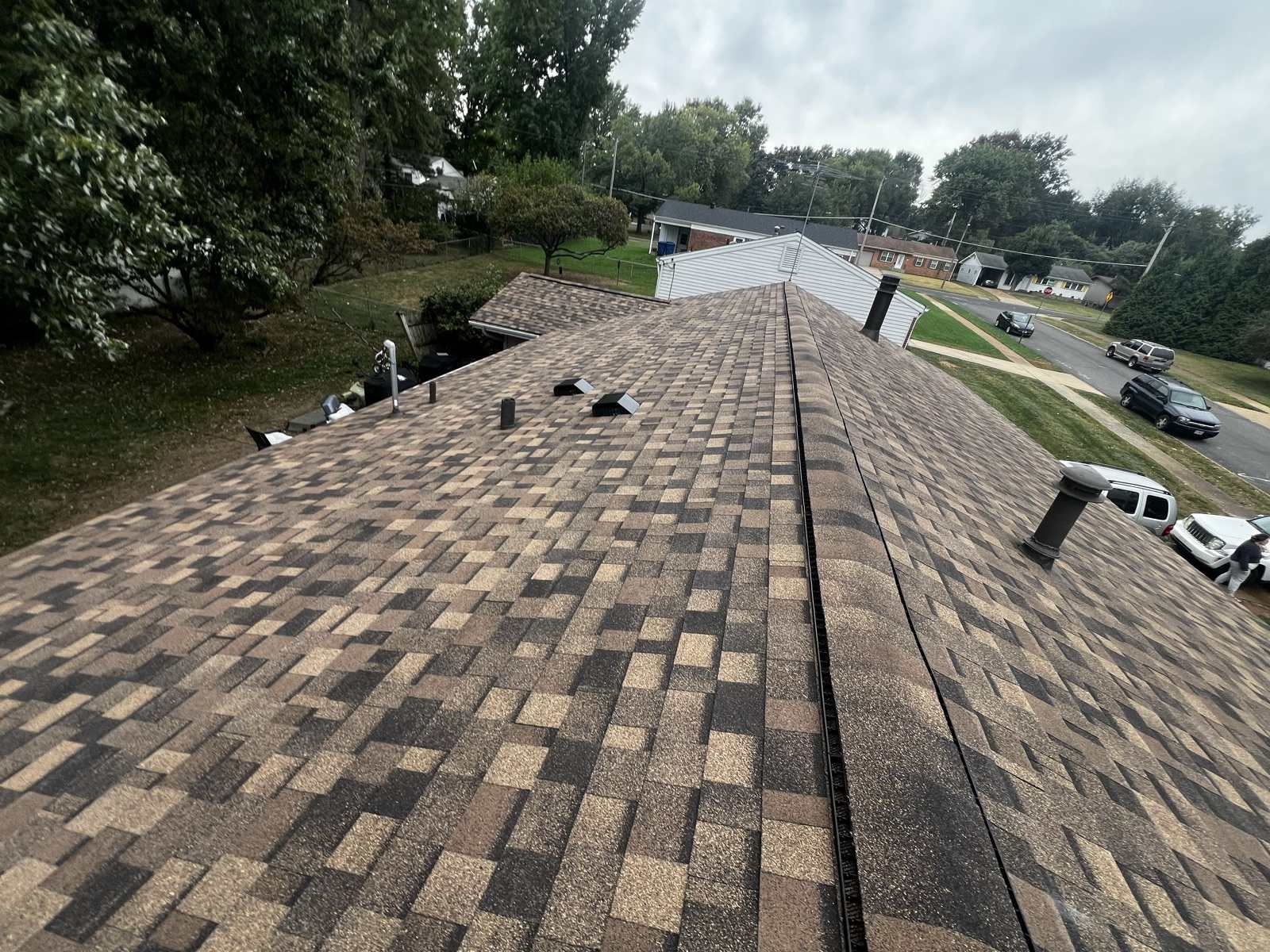
- Every photograph on this desk is a real Keys jobsite
Quicker by phone(314) 220-2333
Second opinion
Send it, get a callback
Send it and the office rings you back. If somebody has already quoted you, say so and bring the paper.