Hail Damage Roof STL · Straight after
What to do in the first seventy two hours after a hailstorm
Forty minutes of work today is worth more than anything you can do about this in six months. Stones melt, fresh dents go dull, and the record you build this week is the one you will be holding when it matters. Here is the order.
Start at the top of this list and work down. It takes about forty minutes, none of it involves a ladder, and every step is something nobody can do for you later. The alternative is the common one: stand in the garden feeling vaguely worried, do nothing for three months, and then try to reconstruct the storm from memory in the spring.
-
Deal with anything actually dangerous first
Downed lines, a tree on the structure, obvious structural damage, or water actively coming into the house. If a limb is through the roof or water is running down an interior wall, that is a phone call now, not a documentation exercise. Everything below assumes the house is safe and dry.
-
Write down the date and the time
The date of the storm, roughly when it hit, and how long the hail lasted. If you can estimate the stone size against a coin or a ball, note that too. This sounds trivial. It is the single most useful sentence in the whole file later, because a hail claim frequently turns on tying the loss to a specific dated weather event, and the NOAA record for your county will either corroborate you or not.
-
Photograph stones, if any are left
Next to a coin, a tape measure or a ruler, on a surface that will show in the frame. Hail melts fast in a Missouri spring and this photograph has a half life measured in hours.
-
Walk the perimeter and photograph the soft metal
Downspouts, gutter faces, the air conditioning condenser fins, the garage door, window screens, painted trim, the mailbox. Shoot each one with the light raking across the surface rather than straight on, so dimples cast a shadow. Note which elevations have marks and which do not. The survey order in detail is here.
-
Photograph the house wide, from all four sides
These are boring photographs and they are the ones that establish context: what the property looked like on this date, from every elevation. Take them anyway.
-
Look at the ceilings
Room by room, particularly under valleys, around chimneys, and at the top of exterior walls. Fresh staining is a leak. An old stain that has not changed is a different problem. Photograph either.
-
Control water, do not repair
If something is coming in, a bucket, a tarp inside the attic, and moving what is underneath is the correct response. Do not start repairing the roof, and do not throw away damaged material, because it is evidence. Emergency measures to prevent further damage are normally reasonable and are normally reimbursable; keep the receipts.
-
Do not sign anything at the door
Within a day or two of a serious hail event there will be people on the street. Some of them are competent local companies. Some of them followed the storm here from three states away and will be gone by August. Nothing that arrives at your door needs a signature today. This is worth its own page and it has one.
-
Read your own declarations page before you talk to anyone
Four things to find, all on the first page or two of your policy: the deductible for wind and hail, which on many Missouri homeowner policies is a percentage of the dwelling limit rather than a flat sum; whether roof loss is settled at replacement cost or actual cash value; whether there is a roof surfacing schedule that reduces the payout with age; and whether there is a cosmetic damage exclusion, which matters enormously if you have metal anywhere.
-
Get a documented inspection
Photographs, test squares, measurements and a written scope, in your hand, whether or not there turns out to be anything wrong. That is a real finding either way, and it is the thing you actually need before deciding whether a claim is worth filing at all. What the inspection covers.
The decision that is genuinely yours
Whether to file a claim at all is a judgement, and it is not a roofer's judgement to make. If the deductible on a wind and hail loss is two percent of a four hundred thousand dollar dwelling limit, that is eight thousand dollars, and a finding of light granule loss on one slope may not be worth the claim. That arithmetic belongs to you, ideally with your agent, and it deserves the actual numbers rather than a stranger's enthusiasm. What the inspection gives you is the information to do the arithmetic with.
If somebody at your door offers you this, close it
RSMo 407.725 bars a roofing contractor from representing or negotiating your insurance claim, from offering or advertising to do so, and from offering to pay, waive or rebate any part of your deductible. Anybody promising that this week is describing conduct the statute prohibits, and they are telling you so in the first two minutes, for free.
RSMo 407.725
Do it this week
The record is best the week it happens
Stones melt within hours and the bright metal at the centre of a fresh dent goes dull. Photographs by elevation, a chalked test square counted on every slope and measurements in writing are worth far more taken now than taken in April. You keep the file whether the roof is damaged or sound.
Keys Roofing
Get the roof documented while it is still fresh
This desk is published by Keys Roofing, the roofing, gutter and downspout contractor for greater St. Louis. When you are ready for someone on the roof with a camera, this is the crew that climbs it.
- Licensed and insured, greater St. Louis
- Atlas and Malarkey shingles, installed by the company you call
- Roofing, gutters and downspouts. Nothing else.
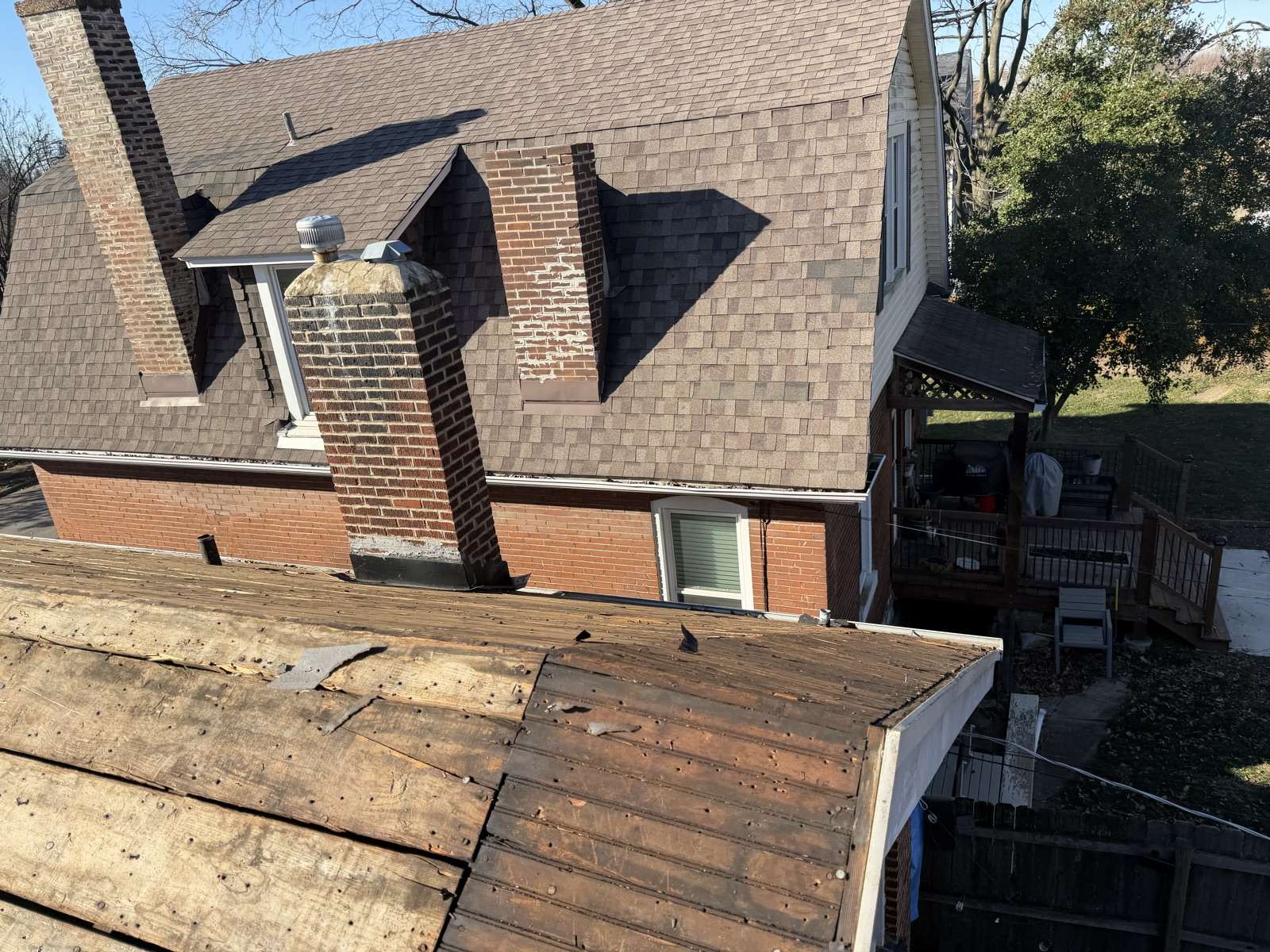
- Every photograph on this desk is a real Keys jobsite
Quicker by phone(314) 220-2333
Step ten, today
Send it, get a callback
Send it with the storm date and what you saw from the ground. The office rings back to set a time.