Hail Damage Roof STL · Evidence
Read the soft metal first: did hail reach your house?
Before anybody puts a ladder up, walk the perimeter and look at your downspouts, your gutter faces and the fins on the air conditioner. Shingles absorb a strike and hide it. Aluminium takes the shape of it and keeps the shape, which is where a hailstorm signs its name. Here is the survey order, from the ground, in about fifteen minutes.
Start in the driveway. A hailstone that hits a shingle transfers its energy into a flexible, granulated, asphalt-backed mat that deforms, absorbs, and springs most of the way back. A hailstone of the same size that hits a section of aluminium gutter coil, which is around thirty thousandths of an inch thick, deforms it permanently. The dent is still there next year. It is still there when you sell the house.
That turns a set of parts nobody thinks about into a dated instrument record of the storm, and you can read most of it yourself this afternoon without leaving the ground. It is also frequently over-read, so start with what a dimple does and does not establish.
What a dent proves and what it only suggests
It proves that hail of a certain minimum size struck this property, from a particular direction, hard enough to deform metal. That is not nothing. A great many hail claims fall over at exactly the question of whether the storm actually reached this address, because a hail core can be a mile wide and the street behind you can have had nothing.
It suggests that the roof above took comparable impacts, and it tells the inspector which slopes to concentrate on. What it does not do is establish that the shingles are compromised. Shingles have their own thresholds, and those depend on the age, the brand, the temperature on the day, and the angle of the slope relative to the storm. A dimpled downspout with a genuinely intact roof above it is a real outcome and an honest inspector will tell you so.
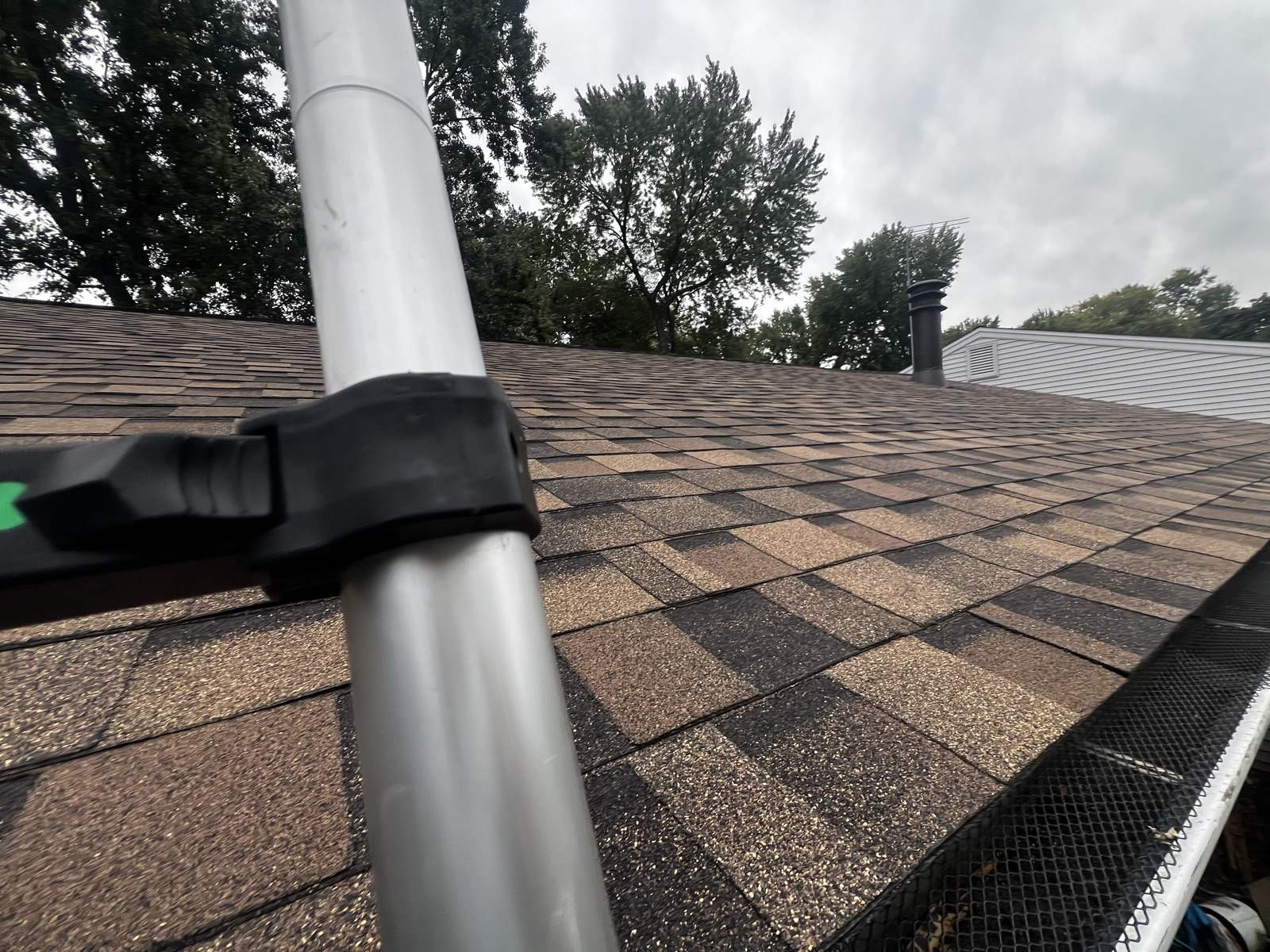
The survey order, from the ground
Do this from the driveway and the garden. Do not put a ladder up after a storm, particularly not on a wet roof, and particularly not to satisfy curiosity about something that is not leaking.
-
Downspouts, all four elevations
Walk the perimeter and look along each downspout with the light raking across it rather than head on. Dimples show as a broken reflection. Note which sides have them and which do not.
-
Gutter faces and the gutter apron
The outward face of the gutter is the second softest surface. The apron, the strip of metal that tucks under the first shingle course, is the third. Both take clean impressions.
-
The air conditioning condenser
The fins on a condenser unit are the softest metal on any house. If the fins on one side are flattened and combed over, that side of the house took direct hail. This is the single most reliable ground-level indicator there is.
-
Painted surfaces at a low angle
Garage door panels, steel entry doors, the mailbox, window and gutter trim, and any painted metal railing. Look for chipped paint at the centre of a small dish. Vinyl siding cracks rather than dents, and cracked siding is a strong indicator on its own.
-
Soft organic evidence, if you are quick
Stripped leaves under a tree, shredded hostas, punched window screens, dimples in a wooden deck rail, and marks on the top of a fence cap. All of this disappears within a fortnight, which is one more reason to walk it early.
What an inspector adds once they are on the roof
The metal on the roof itself carries the clearest record of all, because it is horizontal and directly exposed. Valley metal, drip edge, ridge vent caps, box vent tops, turbine housings, the collars on pipe boots, the counter flashing at a chimney, and any lead or aluminium plumbing jack. Each of these is checked and photographed elevation by elevation, and the pattern across them is what turns a set of individual dents into a directional finding.
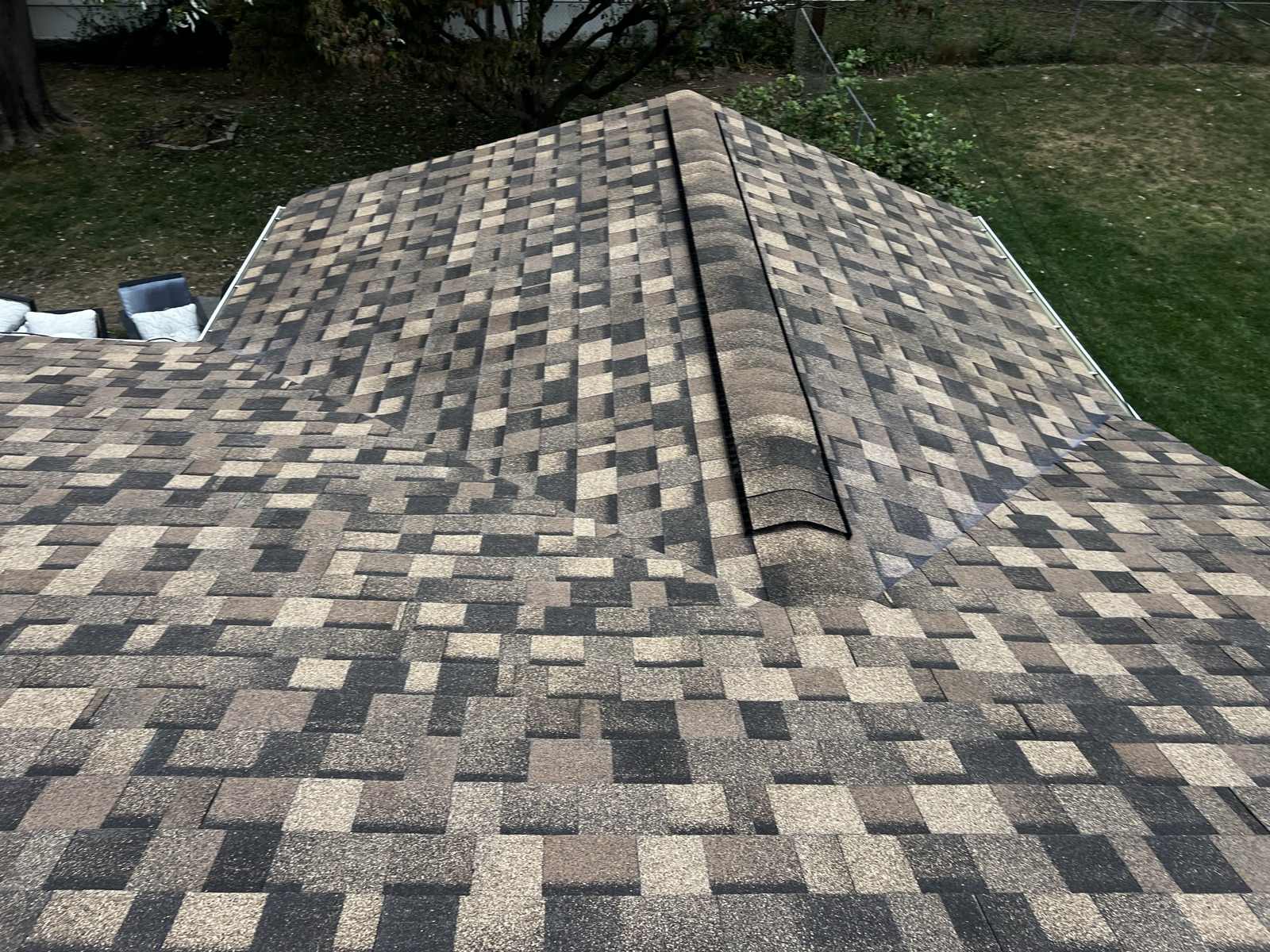
Two things that mislead people
Old dents. Metal keeps a record, and it keeps every record. A downspout can carry hail dents from three separate storms across a decade, and a dent has no date on it. What dates a dent is fresh bright metal at the centre where the coating cracked, or a photograph of the same downspout taken before. This is why the dated inspection matters more than the dents do.
Absence of dents. No dimpled metal does not clear the roof. Small hail driven hard by wind can strip granules from an aged shingle while barely marking a gutter, and a house with all-vinyl trim and buried downspouts may have almost no soft metal to read. The survey is an indicator, not a verdict.
Write down the date
Whatever you find, note the date and time of the storm and take the photographs the same week. A hail claim is very often decided on whether the loss can be tied to a specific dated weather event, and the NOAA record for your county will show what was reported and when. Your own dated photograph is the other half of that.
After the ground walk
The roof metal is the half you cannot read from the garden
Valley metal, drip edge, ridge vent caps, box vent tops, turbine housings, pipe boot collars and the counter flashing at a chimney. All of it lies horizontal to the sky and dents at a lower threshold than a shingle bruises at, and all of it needs somebody up there with a camera.
Keys Roofing
Tell us which elevations are marked
This desk is published by Keys Roofing, the roofing, gutter and downspout contractor for greater St. Louis. When you are ready for someone on the roof with a camera, this is the crew that climbs it.
- Licensed and insured, greater St. Louis
- Atlas and Malarkey shingles, installed by the company you call
- Roofing, gutters and downspouts. Nothing else.
- Every photograph on this desk is a real Keys jobsite
Quicker by phone(314) 220-2333
Found dimples
Send it, get a callback
Send it with the sides that show dents and the date of the storm. The office rings back.