Hail Damage Roof STL · The inspection
What a documented hail inspection covers, and what you keep
A person, a ladder, a camera, a chalk square and about an hour, and there is no charge for it. At the end you are holding photographs organised by elevation, a counted test square from every slope, measurements and a written scope, whether the roof turns out to be damaged or sound.
Here is the whole thing in the order it happens, so you can hold it against whatever turns up at your door this week. The word inspection covers everything from a documented survey to a man walking round your house for six minutes so that he can knock and say your roof is destroyed. The difference is not the ladder. It is what exists on paper at the end, and who is holding it.
Before the ladder goes up
The ground survey comes first, because it is free information and it shapes everything after it. Elevations are walked, soft metal is checked, the condenser fins are looked at, and the storm date is established from what you remember and from what the weather record shows for your county. The age of the roof, the number of layers if that is known, and any previous repair work all get noted, because a fifteen year old three tab and a four year old architectural shingle bruise at completely different thresholds.
On the roof
- Every slope, individually. North, south, east and west faces are surveyed and photographed separately, because storms are directional and a report that averages the whole roof tells nobody anything.
- The test square. A ten foot by ten foot square is chalked out on each slope and the impacts inside it are counted and marked. This is the standard way a hail finding gets quantified, and it is the language an adjuster works in. A slope with a handful of hits in a hundred square feet is a different conversation from a slope with thirty.
- Bruises found by hand. Suspected soft hits are pressed and confirmed by touch, then circled in chalk so they are visible in a photograph. This is the part that cannot be done with a drone.
- Sealant strips. Tabs are lifted at random along the field to check whether the adhesive strip is intact, because broken strips are a wind failure waiting to happen and they do not show from above.
- All roof metal. Valley metal, drip edge, ridge vent, box vents, turbines, pipe boot collars, chimney and step flashing, and any skylight surround.
- Everything that is not hail. Blisters, foot traffic, tool damage, nail pops, exposed fasteners, prior repairs, curling, and any manufacturing pattern get identified as such and separated out.
- Measurements. Slope lengths, pitch, squares of roof area, ridge and hip footage, valley footage, penetration count.
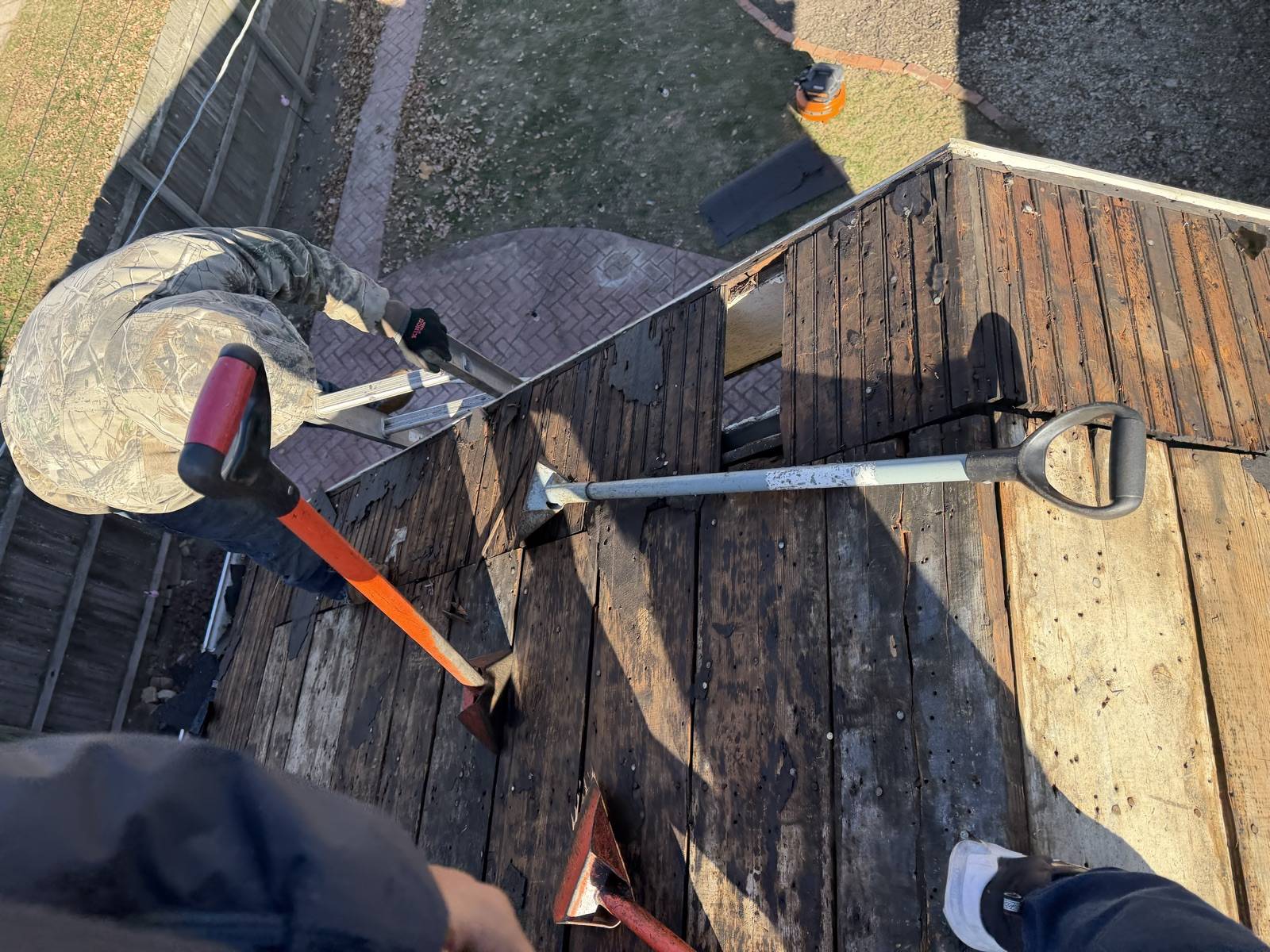
Underneath, and inside
Where there is access, the attic gets a look. Daylight through the decking, staining on rafters or on the underside of the sheathing, damp insulation, and the condition of the ventilation path all matter, and some of them explain problems that have nothing to do with the storm at all. Interior ceilings below valleys and around chimneys get checked from the room side.
What you get at the end
Photographs, organised by elevation and dated. The test square results. The measurements. And a written scope: a description of what was found, slope by slope, and what the repair or replacement would consist of, itemised in the way a roof is actually built rather than as one number at the bottom of a page. If decking replacement is a possibility, the scope says in advance what the rate for that is, because soft boards only appear once the old roof is off and that is a poor moment to be negotiating.
You keep all of it regardless of what you decide to do next. If the finding is that the roof is fine, you get that in writing too, which is genuinely worth having: it is a dated baseline for the next storm, and this metro will supply one.
What no Missouri roofer may offer you, including this one
Under RSMo 407.725 a roofing contractor may not represent or negotiate on a homeowner's insurance claim, may not offer or advertise to do so, and may not offer anything at all involving your deductible. What Keys does instead is document the roof and stand on the property as the contractor while your adjuster inspects, so the person who actually walked those slopes is there when questions get asked about them. If you want somebody who can argue the claim for you, that role belongs to a licensed public adjuster, and the same law bars a public adjuster from performing the repair work.
RSMo 407.725 · RSMo chapter 325
Two practical notes
Do not climb up yourself. Falls from residential ladders are one of the more common serious home injuries in the country, and a wet or hail-glazed roof is worse than a dry one. There is also a second reason: walking an aged asphalt roof causes granule displacement and scuffing that looks like damage and muddies the record you are trying to build.
If the finding is age rather than storm, you get told so. It is a different conversation with different economics, and a company willing to say it out loud in your driveway is the one you want on the roof.
Keys Roofing
One hour, one ladder, and you keep the file
This desk is published by Keys Roofing, the roofing, gutter and downspout contractor for greater St. Louis. When you are ready for someone on the roof with a camera, this is the crew that climbs it.
- Licensed and insured, greater St. Louis
- Atlas and Malarkey shingles, installed by the company you call
- Roofing, gutters and downspouts. Nothing else.
- Every photograph on this desk is a real Keys jobsite
Quicker by phone(314) 220-2333
Book it
Send it, get a callback
No charge for the visit. Send it and the office rings you back to set a time. Greater St. Louis.